If you work for a state government in India, you’ve probably seen the 8th Pay Commission headlines and wondered whether a raise is coming your way too. It’s a fair question, and the short answer is no, not automatically. The 8th Central Pay Commission was set up by the Union government for Union government employees. What happens to your own salary depends on your state’s cabinet, its budget, and how quickly it chooses to act, if it acts at all. That gap between “central decision” and “state paycheck” is where most of the confusion lives, so let’s sort through it.
What the Commission Actually Covers
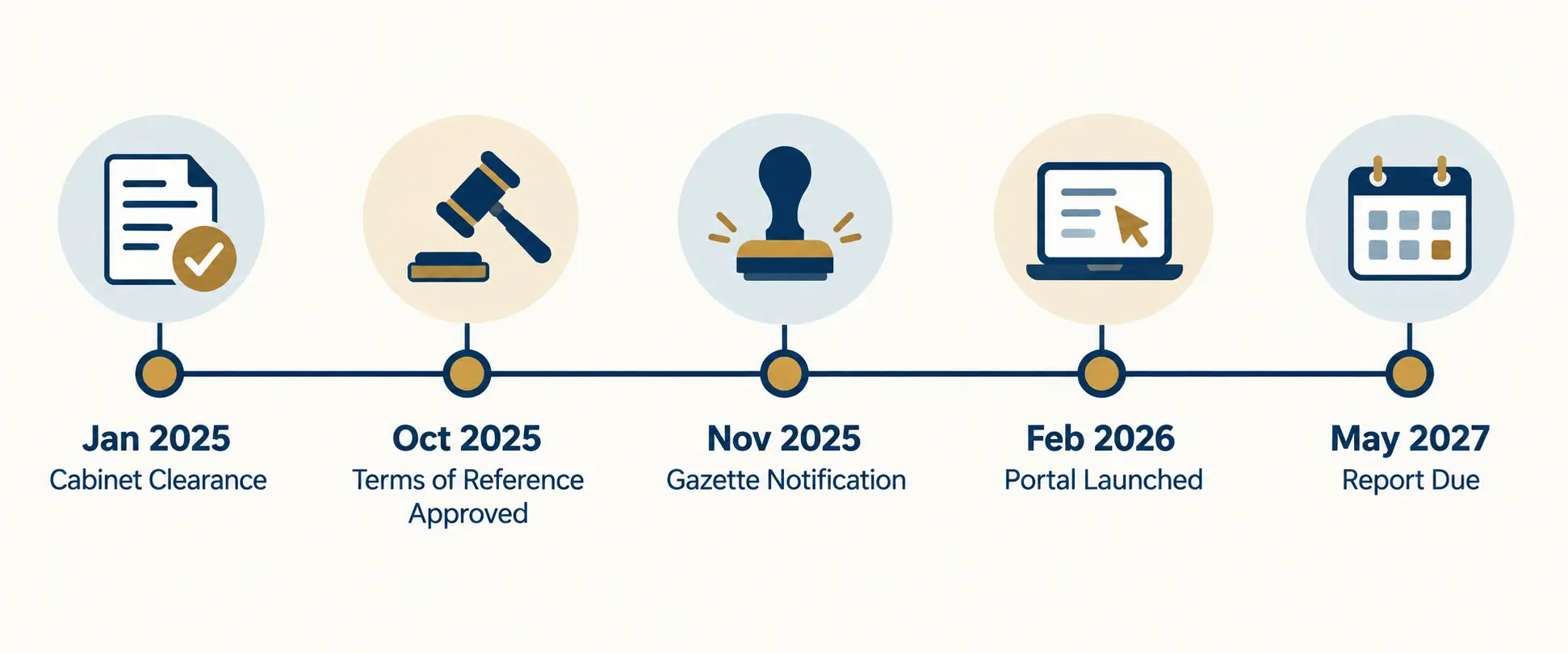
A Central Pay Commission is a panel the Union government appoints roughly every ten years to review pay, allowances, and pensions for Central Government employees and other categories covered by its terms of reference. It does not, by itself, set the salaries of state government employees. The current one was cleared by the Cabinet on January 16, 2025, and formally notified through a gazette order on November 3, 2025. It’s chaired by Justice Ranjana Prakash Desai, a retired Supreme Court judge, with Prof. Pulak Ghosh as part-time member and Pankaj Jain serving as Member-Secretary.
Its job is to cover roughly 50 lakh central civilian and defence employees, along with 65 to 69 lakh pensioners. It’s supposed to submit its report within 18 months, which puts the target around May 2027. Following the usual ten-year cycle, January 1, 2026 is the date from which the recommendations are expected to take effect, but that’s not the same as revised salaries actually landing in anyone’s account from that date.
Actual payment follows only after the government approves the report and issues its own implementation orders, which is typically later still. As of September 2026, the Commission has not finalized its recommendations. There is still no officially announced fitment factor (the multiplier used to convert existing basic pay into the revised structure) or new pay matrix. The numbers you’ve probably seen floating around, anywhere from 1.83 to 3.00, are guesses and union demands, not official figures.
Why This Doesn’t Automatically Reach States
Here’s the part people miss: leaving states out isn’t an oversight, it’s baked into how India divides power over public jobs. The Constitution splits authority between the Union and the states through the Seventh Schedule, and under Article 309, each state government (acting through its Governor, until the state legislature passes its own law) decides pay and service conditions for its own employees. The Centre simply has no constitutional hand in state treasuries.
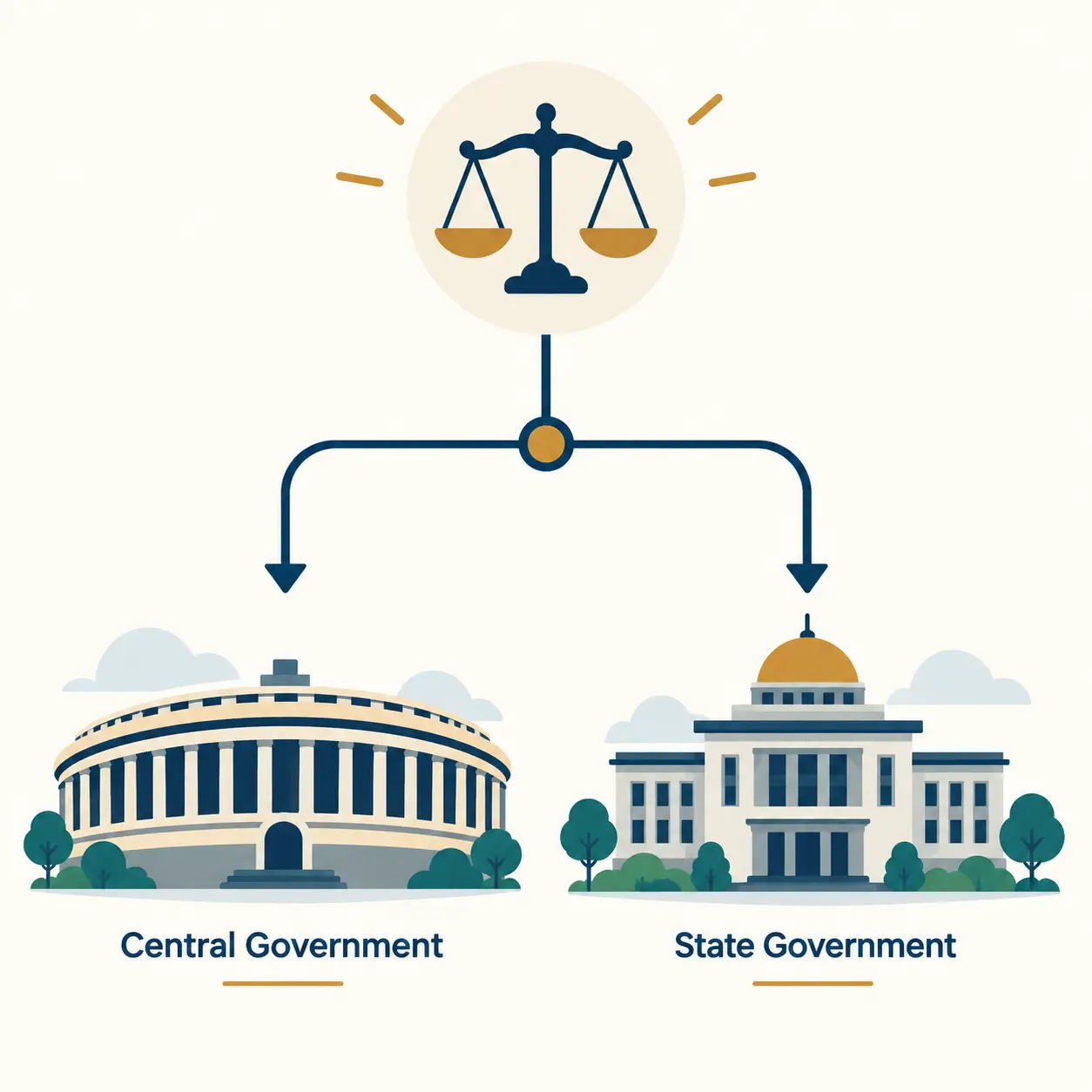
That said, the Commission isn’t ignoring states entirely. Its official terms of reference specifically ask it to study how its recommendations would ripple into state finances, since states have historically felt pressure to match central pay once it moves. But “feeling pressure” and “being legally bound” are two very different things, and only the second one would force a state’s hand.
What the Courts Have Actually Said
This isn’t just theory. In 2002, the Supreme Court ruled on a case brought by Haryana’s Personal Assistant staff, who wanted pay parity with their counterparts in the central secretariat. The Court rejected the claim for automatic pay parity, holding that pay fixation and determination of parity are primarily matters for the executive to work out, not something a court can simply order, and that merely having a comparable designation doesn’t establish a right to identical pay as a central employee working under a different employer with different finances.
A 2026 ruling involving West Bengal state employees, over a dispute about Dearness Allowance (the cost-of-living top-up added on top of basic pay), added an important wrinkle. Where a state has itself framed statutory service rules governing an allowance like DA under Article 309, those rules can create obligations the state is legally bound to honour. But the ruling didn’t hand the Union any new authority to prescribe a state’s overall compensation structure. States write their own rules; once they do, they’re expected to follow them, but the Centre still isn’t the one setting them.
How States Usually Handle It, and What History Shows
In practice, states tend to take one of three routes once a central pay commission finishes its work: adopt the central structure with tweaks, appoint their own pay commission to design something from scratch, or set up a study committee to figure out what’s affordable before deciding anything. None of it happens on the Centre’s timeline.
Nagaland is a useful example, and probably the most relevant one for readers here. After the 7th CPC, the state adopted the 2.57 fitment factor used by the 7th CPC through its own pay-revision orders, but the numbers on paper and the money in hand were two very different stories. The notional fixation date was set at June 1, 2017. Actual cash payments didn’t start until April 2020, and arrears built up between January 2018 and February 2020 weren’t paid out in cash at all. They were folded into employees’ provident fund accounts instead, meaning the money went straight into long-term retirement savings rather than a lump sum in hand.
Assam went a different way, setting up its own 7th Assam Pay and Productivity Pay Commission and introducing a state-specific structure of five running pay bands and 24 grade-pay categories, with cash payments flowing from 2017 onward. Meghalaya also ran its own commission and adopted a 2.68 fitment factor, built around its own 22-level matrix. Karnataka took the longest road of all: it didn’t even constitute its 7th State Pay Commission until late 2022, and the resulting 27.5% pay hike only became effective in August 2024, nearly eight years after the central 7th CPC took effect.
The pattern across the states is clear: there is no fixed timetable. Some states broadly follow the Centre’s structure, while others take their own route, and implementation can land months or even years after the central revision. Even when a state does match the central basic pay, allowances like house rent or transport tend to get scaled down or restructured to fit local budgets. Gross pay ends up different even when the base numbers look the same on paper.
What This Means for You
Honestly, the central notification isn’t the thing to watch if you work for a state government. It’s not going to arrive one day and change your salary slip. Your state’s own budget session, cabinet decisions, and finance department orders are what will actually move your salary. For states in the Northeast, the two patterns worth expecting are either a Nagaland-style executive adoption with a real delay before cash shows up, or an Assam or Meghalaya-style dedicated pay commission built around local numbers.
Either way, expect it to trail the central rollout, sometimes by a year or more, and expect the fine print, like allowances and arrears, to look different from what central employees eventually get.
If you’re a central government employee instead, the maths will apply to you directly once the Commission’s report is approved. Once the fitment factor is confirmed, you can run your own numbers through the 8th Pay Commission Salary Calculator to see where you’ll land.
Leave a Reply