If you’ve spent any time in a government employees’ WhatsApp group over the last year, you’ve probably seen it: DA is high enough now, so it has to merge with basic pay. It sounds official. It gets forwarded a lot. And it’s simply not what’s happening, at least not according to anything the government has actually put in writing.
Here’s the honest, current picture as of early September 2026. There’s no rule anywhere that automatically merges Dearness Allowance into basic pay once DA crosses a certain percentage. The government has said, more than once, that no such merger is currently on the table. What is coming, eventually, is a full pay revision through the 8th Central Pay Commission, expected to apply from a 1 January 2026 reference date, once the Commission actually finishes its report.
Below is what’s confirmed, what’s still just a union demand, what’s pure speculation floating around online, and where the whole merger rumour started in the first place.
What the Finance Ministry Actually Said
On 1 December 2025, someone in the Lok Sabha asked the government directly: are you planning to merge DA with basic pay to give employees relief from inflation? The Minister of State for Finance, Pankaj Chaudhary, gave a written answer that was about as clear as government answers get: no such proposal was under consideration.
He also explained the logic behind it. DA gets revised twice a year, in January and July, for one reason: to stop inflation from quietly eating into the value of your basic pay. It was never meant to be a way of pumping up your pay mid-cycle. That job belongs to the Pay Commission.
That statement is now nine months old, and nothing has surfaced since to contradict it. As recently as August 2026, the government’s position, reported through official channels, remained the same: there’s no interim DA-merger proposal in motion. That hasn’t stopped unions from asking. More on that below.
DA Merger and Fitment Factor Are Not the Same Thing
This is where most of the confusion comes from, so it’s worth slowing down.
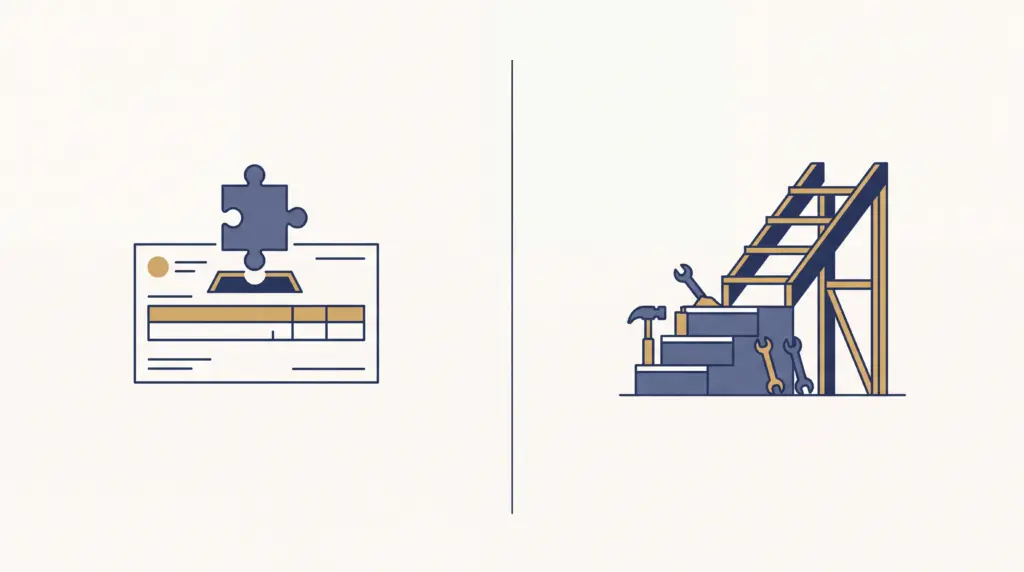
A DA merger is a mid-cycle patch. The government takes a chunk of your Dearness Allowance, say 50%, and reclassifies it as “Dearness Pay.” That amount then gets folded permanently into your basic pay, which matters because HRA, pension, and gratuity are all calculated off basic pay. Merge some DA into it, and everything built on top grows along with it.
A fitment factor works differently, and it’s worth being precise about what it actually does. It’s a multiplier a new Pay Commission works out for the entire pay structure, roughly once every ten years, meant to reflect the DA position, existing pay relativities, and a margin for real wage growth, all bundled into one revised Pay Matrix.
It isn’t simply old DA mechanically bolted onto basic pay; the exact method the 8th CPC will use to arrive at its number hasn’t been made public yet. When the 7th CPC came in, it used a fitment factor of 2.57, worked out to reflect the pay and DA position at that time, not a straightforward doubling of DA into basic pay.
How the 8th CPC Will Actually Revise Your Pay
Once the 8th CPC’s report is accepted and a fitment factor is formally notified, expected to apply from the 1 January 2026 reference date, your accumulated DA gets factored into a new, higher basic pay figure. From that point, your DA percentage resets to zero and starts climbing again under the new structure.
So calling a fitment factor a “DA merger” isn’t quite right. It’s a reset of the whole pay scale built around several factors, not a straight transplant of one allowance into another.
Where This Rumour Actually Comes From
It’s not invented out of nowhere. Something like this did happen once.
Back in 2004, under the 5th CPC, the government issued an order merging 50% of DA into basic pay as “Dearness Pay,” effective 1 April 2004. That Dearness Pay counted toward pension, gratuity, HRA, and every future DA calculation. It was a real financial boost for employees at the time, and it’s the reason the merger idea has stuck around for over twenty years.
The 6th CPC, which took effect from 2006, didn’t carry the Dearness Pay mechanism forward, citing the distortion it caused across pay grades and the unplanned cost to the exchequer. The 7th CPC, from 2016, kept the same approach. Two Pay Commissions running have chosen not to repeat the 2004 move, which is a reasonable basis for expecting the 8th CPC to follow suit, though it isn’t a guarantee.
What Actually Happened When DA Crossed 50%
DA crossed the 50% mark on 1 January 2024, confirmed through a Department of Expenditure order issued that March. Nothing merged into basic pay. What did change were allowances the 7th CPC had already tied to that milestone:
- HRA went up from 27%, 18%, and 9% to 30%, 20%, and 10%, depending on your city category
- The gratuity ceiling, for both retirement and death gratuity, rose from ₹20 lakh to ₹25 lakh
- Allowances like Children’s Education Allowance, Child Care Allowance, and daily allowances all went up by 25%
These were automatic triggers the 7th CPC had already written in, not a fresh decision. None of it touched basic pay. And to be clear about where things stand now: DA has moved well past 50% since then, officially standing at 60% of basic pay from 1 January 2026, but crossing 50% was a one-off trigger under the 7th CPC framework. It doesn’t fire again at 60%, and no further HRA jump is due on that basis alone.
Where the 8th CPC Stands Right Now
The Cabinet approved setting up the Commission on 16 January 2025 and signed off on its Terms of Reference on 28 October 2025. It became official through a Gazette Notification on 3 November 2025, chaired by Justice Ranjana Prakash Desai, a former Supreme Court judge, with Professor Pulak Ghosh of IIM Bangalore as Part-Time Member and Pankaj Jain as Member-Secretary.
Worth flagging something most articles skip: the Terms of Reference explicitly allow the Commission to send interim reports on specific matters as and when they’re finalised, rather than waiting for everything to be ready at once. None have been issued as of early September 2026, but the door is open, and it’s one reason to keep watching official channels rather than assuming the final report is the only thing that could move the needle.
Through 2026 the Commission has been touring the country for consultations: Delhi in May, Ladakh and Jammu & Kashmir in June, then Lucknow, Bhubaneswar, and Kolkata in July. The schedule has kept going since: Jaipur on 31 August–1 September, Chennai on 7–8 September, Puducherry on 9 September, Chandigarh from 16–18 September, and Bengaluru on 7–8 October.
The government also opened a public feedback channel through the MyGov portal, alongside the Commission’s own online questionnaire and memorandum submission process, so individual employees and pensioners, not just unions, have a formal route to weigh in.
The deadline for Ministries to submit salary and staffing data through the Commission’s online portal was originally 30 June 2026, but it was extended to 31 July 2026, and that extended deadline has now passed. The Commission has 18 months from its constitution to submit its final report, which puts that around May 2027. The pay revision itself is expected to apply from the 1 January 2026 reference date, but that’s a reference point for calculating arrears once everything is finalised and notified, not a date on which revised pay actually started appearing in anyone’s account.
Worth repeating: the official Terms of Reference don’t mention a DA merger anywhere. What they do mention is fiscal prudence, the availability of funds for development spending, and the rising cost of pensions the government funds without any employee contribution. None of that points toward an expensive mid-cycle merger, though that’s an inference from the mandate’s tone rather than a stated conclusion.
What the Unions Are Asking For
The National Council of the Joint Consultative Machinery, the main body representing central government employees, finalised its memorandum at a Drafting Committee meeting on 13 April 2026 and submitted it to the Commission days later. The document runs to 51 pages. Its headline ask is a fitment factor of 3.833, which would take the minimum basic pay for Level 1 employees from ₹18,000 to ₹69,000.
Alongside that, the Staff Side wants HRA raised to 40%, 35%, and 30% for X, Y, and Z category cities respectively, the annual increment doubled from 3% to 6%, and a standing rule that automatically merges DA into basic pay whenever it crosses 25% in future pay cycles. The Commission’s Standing Committee held its first meeting with NC-JCM representatives on 28 April 2026 to hear these points directly.
NC-JCM isn’t the only voice pushing for an interim merger, either. In February 2026, the Federation of National Postal Organisations wrote separately to the Commission’s Chairperson asking for 50% of DA to be merged with basic pay as immediate relief, backdated to 1 January 2026. As far as the public record shows, the government’s position hasn’t shifted in response to either request.
Worth being clear: none of this is a government decision. These are the demands employee bodies have put in front of the Commission. What it actually recommends, and what the government ultimately accepts, are separate questions still waiting on the final report.
What This Means for Pensioners
Retirees get Dearness Relief instead of DA, but it works the same way mathematically, and it’s currently at the same 60% rate. Back in 2004, when 50% DA became Dearness Pay for serving employees, an equivalent share of DR merged into pensions too, so the two groups moved together.
For the 8th CPC, the NC-JCM has asked that whatever fitment factor gets applied to salaries should apply equally to pensions, and pensioner associations have separately forwarded their own representations to the Commission through the Department of Pension & Pensioners’ Welfare. Whether any of that happens depends partly on a specific instruction in the Commission’s Terms of Reference: to examine the cost of pension schemes the government funds without any employee contribution. Given that language, a generous mid-cycle bump for pensioners looks unlikely, though again, that’s an inference rather than anything officially confirmed.
Running the Numbers
None of the figures below are official. They’re illustrative only, so you can see how the mechanics differ, not a forecast of what you’ll actually receive.
Take a Level 1 employee on the current minimum basic pay of ₹18,000, in a metro city. If the mythical 50% DA merger actually happened, illustrative monthly pay components would land around ₹35,100, a modest bump, mostly from HRA recalculating on a slightly higher base. Compare that to a commonly cited but entirely unofficial fitment factor of 2.86, which would put the figure at roughly ₹66,924, or the NC-JCM’s actual demand of 3.833, which lands closer to ₹89,700.
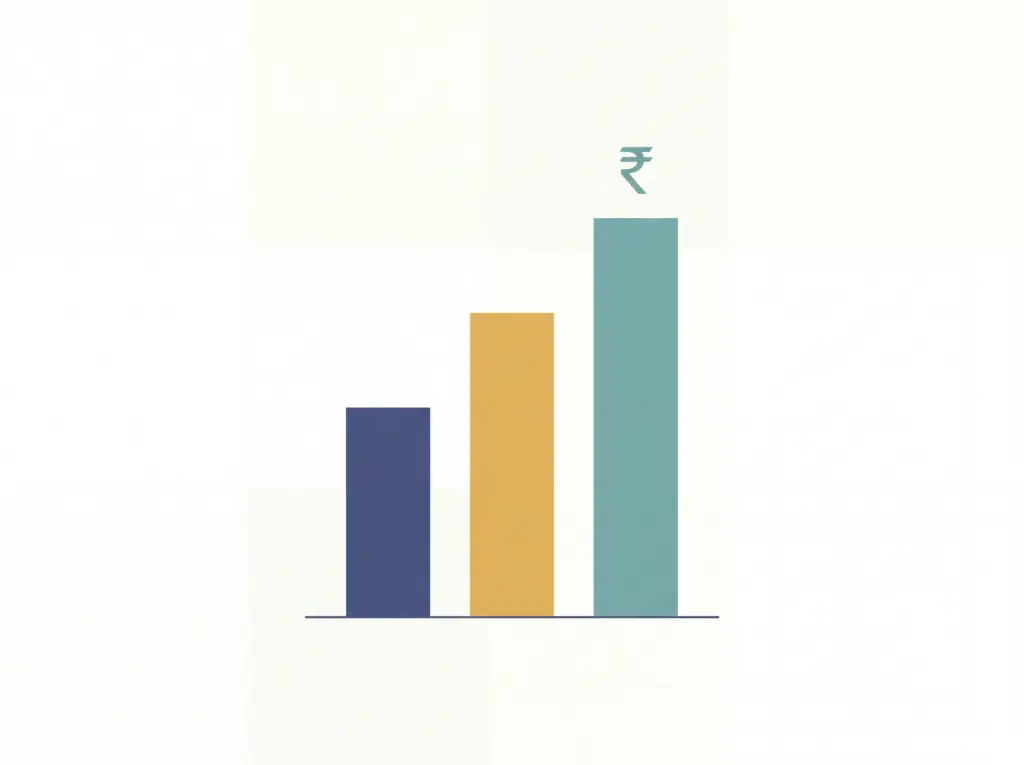
These numbers only cover basic pay, DA, and HRA. They leave out NPS or GPF deductions, income tax, transport allowance, and other components that would appear on a real payslip, so treat them as a rough illustration of scale rather than a full salary breakdown. The fitment factor route isn’t just bigger than a DA merger. It’s a completely different mechanism, resetting the whole pay structure instead of nudging one allowance. If you want to see what a specific fitment factor would mean for your own basic pay, plug your numbers into the calculator on this page. It’s built to run exactly these scenarios, and you can try more than one number since nothing is confirmed yet.
Quick Answers
Is DA merging with basic pay right now? No such proposal is currently under consideration, according to the government’s own statements, most recently reaffirmed through 2026.
What’s the current DA rate? 60% of basic pay, effective from 1 January 2026, confirmed by the Union Cabinet in April 2026. A further rise to around 63% is expected from 1 July 2026 based on inflation data, though the formal Cabinet order was still pending as of early September.
Did anything change when DA hit 50%? Yes, but not basic pay. HRA and the gratuity ceiling went up in 2024, following rules the 7th CPC had already set years earlier. That trigger doesn’t fire again as DA keeps rising.
Will the 8th CPC absorb DA into the new pay scale? That’s the expectation, through whatever fitment factor it eventually recommends. Once that’s applied, your DA percentage starts again from zero. The exact mechanism hasn’t been officially spelt out yet.
Is 2.86 the confirmed fitment factor? No. Nobody outside the Commission knows the final number. Estimates circulating online span a wide range, and none of them carry any official weight until the government notifies otherwise.
The Bottom Line
As things stand in early September 2026, no DA merger is under consideration, and the government has said so repeatedly, even as individual unions keep asking. What’s actually coming is a comprehensive pay revision through the 8th CPC, expected to apply from a January 2026 reference date once its report is finalised, likely around May 2027, built around a fitment factor that takes your accumulated DA into account when setting a new basic pay. The exact multiplier isn’t settled. NC-JCM wants 3.833; other estimates floating around are lower. Until the Commission’s report lands and the government notifies it, treat any specific number you see online, 2.86 included, as someone’s guess rather than a fact.
Leave a Reply