
If you work for a government-owned company, known officially as a Central Public Sector Enterprise (CPSE) or PSU, you probably have January 1, 2027 circled on your calendar. Because PSU officer salaries traditionally get overhauled every ten years, plenty of WhatsApp forwards claim an automatic raise is right around the corner.
Honestly, it isn’t. As of mid-November 2026, the Government of India has not even formed the 4th Pay Revision Committee (4th PRC), and your January 2027 payslip won’t magically jump on New Year’s Day. Between a blunt Finance Ministry statement in Parliament and strict company profit rules, what happens next looks very different from the rumors.
Where the 4th PRC Stands Right Now (and Why 8th CPC Calculators Fail)
A 10-year calendar cycle doesn’t trigger a PSU raise by itself. Every salary overhaul requires a long chain of government sign-offs. During the 2007 cycle (the 2nd PRC), it took 23 months past the January 2007 reference date before the Department of Public Enterprises (DPE), the Finance Ministry office that sets PSU pay rules, issued final orders in November 2008.
To avoid that kind of lag for the 2017 cycle, the government set up the 3rd PRC under retired Justice Satish Chandra in June 2016, six and a half months ahead of time. Even then, the Union Cabinet didn’t approve the package until July 2017, with final rollout rules arriving that August.
Right now, we are in November 2026, and the government hasn’t named a chairperson, a committee, or a timeline for 2027. On March 9, 2026, Minister of State for Finance Pankaj Chaudhary told the Lok Sabha in a written parliamentary reply that there is no proposal under consideration to set up a separate, centralized pay committee for roughly 8 lakh non-executive workers and officers below the board level.
Officer groups like the National Confederation of Officers’ Association (NCOA), the Federation of Petroleum Officers (FOPO), and BSNL pensioner associations spent much of 2026 writing to the Finance Minister and Prime Minister asking for an immediate 4th PRC. Still, New Delhi has stayed quiet.
Why the wait? The Finance Ministry is almost certainly holding back until it sees what the 8th Central Pay Commission (8th CPC) recommends. Chaired by retired Supreme Court Justice Ranjana Prakash Desai, the 8th CPC was notified on November 3, 2025 after the Cabinet approved its official review terms, and it has 18 months (until around May 2027) to turn in its report.
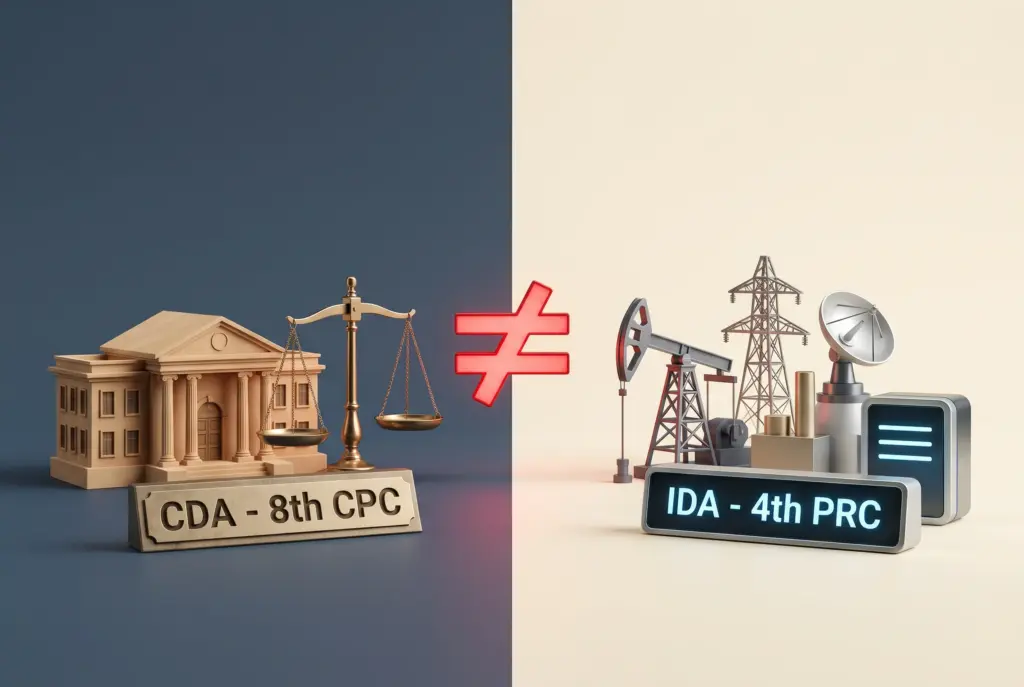
That brings up a common trap. You cannot plug your PSU basic pay into a standard 8th Pay Commission salary calculator and expect an accurate number. The 8th CPC covers around 48.54 to 50.46 lakh central government civilian and defense staff (plus 68.71 lakh pensioners) whose salaries come straight out of the national budget.
Those employees get Central Dearness Allowance (CDA), a twice-yearly inflation adjustment that reached 60% in January 2026 and 63% in July 2026. By contrast, roughly 96% of PSU employees are on Industrial Dearness Allowance (IDA) scales, where every rupee of salary must come from their own company’s commercial earnings.
Only about 4% of PSU workers (mostly legacy staff or government officers on deputation) draw CDA pay, and even they need separate DPE orders before a Pay Commission hike applies to them. As our guide on how the 8th Pay Commission affects bank and PSU employees explains, central government multipliers never transfer automatically to PSU payrolls.
Fitment Benefit vs. Fitment Factor: How the Math Works on Your Paycheck

Most people don’t realize this at first, but a “15% fitment benefit” is not the same thing as a “1.15 fitment factor.” Mixing the two up will throw your salary math off by tens of thousands of rupees.
In PSU pay revisions, the fitment benefit is a percentage raise added on top of your old Basic Pay plus 100% of your accumulated inflation allowance (IDA). Back on January 1, 2017, accumulated IDA stood at 119.5%. If you were an officer drawing ₹50,000 in 2007-scale Basic Pay, your 119.5% IDA equaled ₹59,750. Adding those together gave a combined base of ₹1,09,750.
A maximum 15% fitment raise on that base added ₹16,462.50, bringing your new 2017 Basic Pay to ₹1,26,212.50 (before rounding to the next ₹10). Divide that new basic pay by your old ₹50,000 basic salary, and your effective multiplication factor came out to 2.52x. Applying a 1.15 multiplier directly to ₹50,000 would have given you just ₹57,500 because it leaves out the merged inflation allowance.
That’s the tricky part for 2027. Because inflation over the past decade ran lower than it did between 2007 and 2017, your accumulated IDA cushion is roughly half as large today. According to the Finance Ministry’s Dearness Allowance guidelines portal, DPE revises IDA four times a year (January, April, July, and October) using industrial worker price data. Its October 27, 2026 order set the IDA rate for 2017-scale executives and non-unionized supervisors at 59.1% starting October 1, 2026, up from 55.7% in July (while older 2007, 1997, and 1987 scales moved to 249.2%, 489.5%, and ₹18,728).
At 59.1% IDA, even if the government repeats a 15% fitment benefit, the effective multiplier on your 2017 Basic Pay sits near 1.83x, nowhere near 2.52x or the higher numbers often floated in 8th Pay Commission fitment factor estimates.
What about rumors of a mid-cycle 50% IDA merger into Basic Pay? There is no such rule. Under the August 2017 DPE allowance rules, crossing 50% IDA triggered automatic step-ups instead: House Rent Allowance (HRA) rose from 24%, 16%, and 8% to 30%, 20%, and 10% across X, Y, and Z cities (check your tier on the 2026 HRA city classification list), and the ₹20 lakh tax-free gratuity ceiling went up by 25%. A full 100% IDA merger only happens when a formal pay revision takes effect, folding accumulated IDA into Basic Pay, resetting IDA to 0%, and typically resetting HRA back to 24%, 16%, and 8%.
Since no official 2027 fitment rate exists yet, here is how the 3rd PRC formula behaves across three hypothetical scenarios for an officer in an X-Class city drawing ₹60,000 Basic Pay in October 2026 (whose current monthly gross cash pay before variable bonuses is ₹1,34,460, based on Basic Pay, 59.1% IDA, 30% HRA, and 35% cafeteria perks):
| Illustrative Scenario | Fitment Raise on (BP + 59.1% IDA) | Effective Multiplier on 2017 Basic | New Basic Pay (₹) | New Gross Pay at 0% IDA, 24% HRA & 35% Perks (₹) | Cash Increase vs. Oct 2026 |
|---|---|---|---|---|---|
| Conservative | 10% | 1.7501x | ₹1,05,006 | ₹1,66,960 | +24.17% |
| Moderate (3rd PRC Rate) | 15% | 1.82965x | ₹1,09,779 | ₹1,74,549 | +29.81% |
| Higher Benchmark | 20% | 1.9092x | ₹1,14,552 | ₹1,82,138 | +35.46% |
Keep two caveats in mind. First, if the January 1, 2027 IDA rate climbs to 62% or 63%, a 15% fitment benefit would nudge the multiplier closer to 1.86x or 1.87x. Second, when the 3rd PRC merged 119.5% IDA in 2017, it simultaneously cut the “cafeteria perks” cap (the menu of allowances you choose from) from 50% of Basic Pay down to 35%. If a future order trims perks from 35% to 25%, that Moderate 15% scenario drops to ₹1,63,571 (+21.65% instead of +29.81%).
The 20% Profit Rule and Why Some PSUs Get Left Behind
Even after the Union Cabinet sets a maximum fitment rate, nobody gets it automatically. Because the central government provides zero tax money for PSU salary hikes, every company must prove it can afford the raise out of its own earnings.
Under DPE rules, the extra 12-month cost of a pay revision cannot exceed 20% of a PSU’s average Profit Before Tax (PBT) over the preceding three financial years. Profit Before Tax is simply what a company earns from operations after deducting interest and equipment depreciation, before corporate income tax. If the full raise exceeds 20% of that 3-year average profit, it gets scaled back:
- Up to 20% of 3-year average PBT: Full 15% fitment benefit.
- Between 20% and 30% of 3-year average PBT: Capped at 10% fitment.
- Between 30% and 40% of 3-year average PBT: Capped at 5% fitment.
- Over 40% of average PBT (or loss-making): Zero (0%) fitment unless a special government revival plan approves it.
Other pay rules stay tightly boxed in. Annual and promotion increments are fixed at 3% of Basic Pay. Company retirement contributions (Provident Fund, gratuity, pension, and post-retirement medical care, which is funded up to 3% of annual PBT) are capped at 30% of Basic Pay plus DA.
Underground mine or offshore hardship allowances (up to 12%) and extra transport allowances for employees with disabilities (updated in January 2026) stay outside the 35% cafeteria perks cap, while half of any company-paid tax on employee housing counts inside it.
At the same time, government policy has steadily shifted from fixed wage hikes (which dropped from 30% in 2007 to 15% in 2017) toward variable Performance Related Pay (PRP). Capped at 100% of Basic Pay for officers and funded from up to 5% of core profits (split 65:35 between current and incremental profits), PRP is tied directly to annual government performance targets.
Under the May 6, 2026 DPE performance evaluation guidelines, any PSU that signs its annual targets more than four weeks late or misses its self-evaluation deadline gets an automatic “Poor” rating, wiping out bonus eligibility.
Look at BSNL to see how strict the profit test is. Because of past losses, BSNL staff are still fighting for their 2017 (3rd PRC) pay revision nine years later, holding union meetings with the Telecom Secretary and Communications Minister right through November 2026.
New Delhi has refused to waive the affordability rule for BSNL to avoid similar demands from stressed units like MTNL or RINL. Prior PSU retirees don’t get pension hikes under a PRC either, since their pensions come from a fixed contribution corpus.
How IOCL, NTPC, BPCL, HPCL, and BEL Stack Up for 2027

Working for a “Maharatna” or “Navratna” company gives your board greater freedom to approve investments (as reaffirmed in June 2026 DPE rules), but it does not let them pay a higher fitment rate than DPE allows. What it does mean is that profitable PSUs have the cash cushion to clear the 20% profit test and fund the full permissible fitment rate, 35% cafeteria perks, and strong annual bonuses.
Audited FY 2025-26 financial filings show all five of these major PSUs in a strong position to fund an eventual raise:
| PSU & Status | FY 2025-26 Revenue / Total Income (₹ Cr) | FY 2025-26 Profit Before Tax (₹ Cr) | FY 2025-26 Net Profit (₹ Cr) | Key Affordability & Financial Context |
|---|---|---|---|---|
| IOCL (Maharatna) | 8,86,224 (Standalone) | 48,784 (Standalone) | 36,802 (Standalone) | 3-year avg PBT (FY24–26) of ₹39,003.33 cr gives ~₹7,801 cr in 20% headroom against ₹10,789 cr total employee benefits. |
| NTPC (Maharatna) | 1,69,724.60 (Standalone Total Income) | 22,556.93 (Before reg. deferral) | 23,162.22 (Standalone) / 27,545.76 (Consol) | Steady regulated tariffs; H1 FY27 standalone PBT hit ₹11,888.35 cr. |
| BPCL (Maharatna) | 5,22,668.25 (Standalone) | 31,104.00 (Standalone) | 23,303.22 (Standalone) / 25,843.45 (Consol) | Standalone debt cut 55% to ₹10,480.09 cr; rebounded from Q1 FY27 loss to ₹4,863.05 cr consol profit in Q2 FY27. |
| HPCL (Maharatna) | 4,78,543 (Standalone) | 22,907 (Standalone) | 17,175 (Standalone) | Net worth ₹59,847 cr; comfortable 0.80x debt-to-equity ratio. |
| BEL (Navratna) | 27,479.63 (Standalone) | 8,075.04 (Standalone) | 6,048.48 (Standalone) | Zero debt; 3-year avg PBT of ₹6,833.20 cr; ₹73,882 cr order book as of April 2026. |
Even with strong earnings like those in IndianOil’s 2025-26 annual performance report, none of these companies can raise officer pay until DPE issues new guidelines, their corporate boards verify the 3-year profit math, and their parent ministries issue a formal Presidential Directive authorizing payroll changes. And if you are one of the ~8 lakh unionized non-executive workers at these plants, your 2027 raise won’t come through the 4th PRC at all; your union leaders and management will negotiate a separate bipartite wage settlement.
What does all of this mean for your household budget heading into 2027? Simply put, don’t count on a bigger paycheck in January 2027. Even if the government acts soon after the 8th CPC submits its report around May 2027, past cycles show it takes roughly 14 months from forming a committee to issuing DPE orders, pushing actual rollout into late 2027 or 2028.
When that order finally arrives, your Basic Pay and DA will likely carry back-pay (arrears) from the official effective date, while revised non-cafeteria allowances usually start only from the date your ministry signs its Presidential Directive. For now, skip the social media calculators, check the official DPE announcements page for the January 2027 IDA order, and let your officer associations and unions handle the push for the new committee.
Leave a Reply